Autumn’s Invitation

Autumn’s Invitation

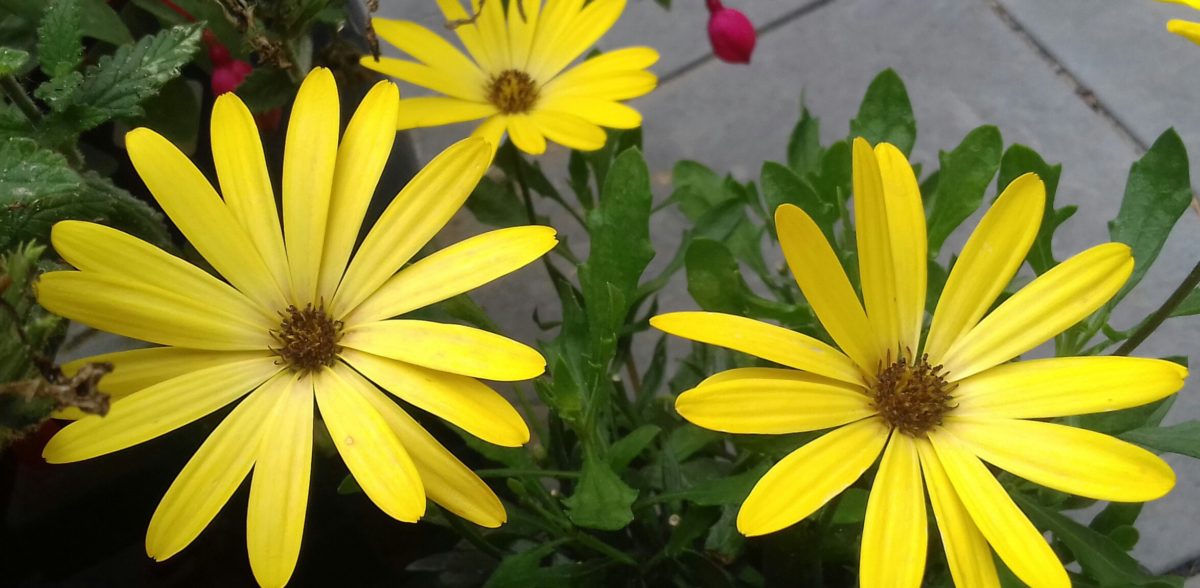
We are surrounded by the stunning colours of leaves changing from living, branch-dancing beauty’s in to dying, drifting to the ground, grass-decorators. This is how the world around us reminds of the natural seasons and cycles that we all transition through.

Autumn invites us to embrace the process of transitioning between seasons. We only need to look around us to see how spectacularly beautiful change can be. Autum invites us to withdraw from the world a little, to replenish our resources. It also asks us to let go of both physical and psychological items and patterns that need releasing/updating. And, we can practice granting ourselves a period of rest and regeneration that must precede any new season of rebirth and renewal.

I keep hearing how people are sorting through and getting shot of old unneeded, dust gatherers, from garages/cupboards/wardrobes. I’m feeling very smug myself after clearing five bags from my own wardrobe. I no longer have a meltdown every time I open the wardrobe door – winning. (Not sure for how long).

These physical sort outs clear physical and psychological space. If we wish to welcome all things new, externally and internally, we must be willing to get shot of the old. This is how we create the necessary space for the new to arise/appear. We can further aid this by consciously stopping to consider what outdated relational patterns we need to shed.

Clue; if we keep getting involved with the same type of characters in an unhelpful way, we need to recognise the invitation to stop to investigate the internal issue behind it. Finding the right counsellor can be key to this. Every time I start a new season of therapy, I think to myself,

‘Wow, counselling is amazing! A space like no other to see what may otherwise go unnoticed, to our detriment. With the right fit and type, counselling can be hugely healing and life enhancing by supporting us to increase what we love and decrease what we don’t, by activating the power to choose.’

And yes, I am bias!

But all the same, we are all a work in progress. We can all benefit from humbling ourselves to ask for help to recognise old, unhelpful, relational patterns so we can grow and heal beyond them. As we shed our old relational imprints and patterns, we release ourselves to step in to new, healthier dynamics.

During a conversation with a woman this morning, we spoke of how reaching the age of fifty, fuels us to say ‘no’, to more of the same old, unsatisfactory relationships (amongst other things). As women, we are programmed to be relentless givers/nice(ripe for exploitation from the takers)/put others first-ers. Fifty appears to be the age when there’s no energy left in the tank to continue this life-sapping approach. Thank God. Thank you, God! Permission granted to say ‘no’ to any bs crossing the line of fifty with us.

Over lunch last Sunday, a fellow super-strong, over-giver remarked that we need to, ‘toughen up’, before instantly correcting herself, with, ‘no, that’s not right’. To which I interjected, ‘no, it’s about wising up’.

Autumn offers the annual invitation to be mindful about what we allow in to any new season with us.

Perimenopause is a massively heightened, exaggerated version of Autumn; identify what/who/where is not coming with you, because it has revealed itself to be part of your past, that needs to be left in the past. This is probably the most valuable investment of time and energy any of us can make as we transition in to new seasons.

And, as the leaves show us, it is a process. As in, it doesn’t happen overnight. We can go through this slowly, mindfully and most powerfully of all, prayerfully.

If you’re not sure what you need to let go of in this season of shedding the old, ask the Lord God Almighty, because he see’s and knows everything. And he will help us to see what is not healthy for us, when we are ready to act upon this, in our own favour. God knows that we often hold on to the familiar for far too long for fear of change, or belief in the lie that,

‘it’s always better the devil you know’.

God often attempts to get us to release our grip of anything unhealthy because he has the healthiest plans for us. If you need encouragement in this, watch the leaves fall away from the branches. You won’t see them clinging on for dear life or hear them wail, ‘but what if the new season never comes …’.

If you need help with any of this (or anything else), feel free to pop a prayer request in the box in the fabulous Bites & Breezes. You can treat yourself to a hot drink or scoff and be blessed by Ozzy and his team.

Or just ask God for whatever you need, yourself. He LOVES it, when us, his children, go to him for help! True story!

Menopause may impact mental health

Stats from the British Menopause Society (BMS) on menopausal symptoms

  • 50% of women say their home life is impacted
  • More than 1/3 say their work life is impacted
  • 42% have an average of 7 symptoms which are much worse than anticipated
  • 36% say their social lives are impacted
  • 50% of menopausal women who have experienced symptoms over the past 10 years, have not consulted a health professional

Every one of us will be affected at some point by the top to toe refurb otherwise known as menopause, that every woman goes through – whether husbands, sons, daughters, brothers, sisters, children, other relatives, colleagues, neighbours or any other human.

While some women have little to no symptoms, and some manage to gain the appropriate medical support promptly, many do not. A fact that has been acknowledged by the medical profession who subsequently introduced mandatory training for Gp’s, on Menopause, in 2024. This delay despite women making up half the population. However while the lateness of this beggars belief, even late, slow progress is still progress.

I was recently reminded of the fact that many women still struggle alone with menopausal symptoms. They often wrongly believe that everyone else is coping and they should be too. Some women are coping whether because they don’t experience such debilitating symptoms or have secured helpful support. But for many, the symptoms are so debilitating as to stop some previously high-flying career women from working at all.

This is clearly an unacceptable reality but one that requires all to participate in changing the tide. This includes women who are not suffering in menopause, accepting that others may have a very different experience. It is unhelpful and unkind to dismiss the experience of a woman struggling with menopause if this is not your own experience.

It was a conversation I had with a local woman who was starting on HRT, that compelled me to write this. Personally, it took me three years of fighting for help to find the excellent GP who is now walking and supporting me through everything menopause related. But just because I’m now being helped and supported doesn’t mean this is true for all. The conversation I had, re-ignited my passion for the injustice of so many women still suffering with symptoms and still struggling to access appropriate support and help.

As taken from the Balance-Menopause website, the latest research conducted by researchers at the Liverpool Moores University and Newson Research, states …

‘Suicide rates among women aged 45–55, the age when perimenopause and menopause typically happens, are notably higher, which could potentially be linked to hormonal fluctuations that affect mood regulation. Despite this, little qualitative research has been carried on the relationship between perimenopause, menopause and mental health challenges, including suicidality.

Researchers at the Liverpool John Moores University and Newson Research spoke to 42 women who experienced suicidal thoughts or mental health problems during perimenopause. Women reported varying degrees of suicidality, from abstract thoughts to suicide attempts, and feelings of hopelessness and entrapment were identified as common triggers.

Other findings from the research, which included interviews with women from the Newson Clinic and the general population, included:

  • Delays in receiving appropriate hormone replacement therapy (HRT) and misdiagnoses, such as being prescribed antidepressants instead of HRT, worsened symptoms
  • Women reported significant improvements in mental wellbeing after receiving timely HRT
  • Support from loved ones and colleagues, and lifestyle changes were also identified as beneficial.

Researchers concluded that better understanding, quicker access to hormone treatment and more support from health professionals could save lives, and that more open conversations are needed.’

For more expert facts, stats and advice, try Dr Louise Newson for her Balance FB page. This offers expert opinions, and includes an App to track cycles and symptoms. This app can support us women to capture and convey symptoms, to share with a Gp, which in turn helps them to prescribe the most helpful treatment. There is an informative an helpful article in the library of The Balance-Menopause website, which gives details on how best to approach a Gp appointment.

For readers, I recommend, ‘Older and wider’, by Jenny Éclair (hilarious) and, ‘What is wrong with me?’, by Lorraine Candy (encouraging). For those preferring TV or podcasts, all things Davinia McCall.

Menopause is when a woman has had no period for over twelve months. Perimenopause is the time preceding this when periods may change by becoming lighter/shorter/heavier/erratic/different. Our system may then start to malfunction in multiple ways as hormones are connected to most parts of the body’s functioning, stretching way beyond hot flushes.

What I wish I had known before entering perimenopause is, 1) it existed, 2) that it can start in the 40’s (earlier for some), 3) that a basic level of menopause training has only been included in Gp’s training since 2024, 4) to trust ourselves as we are the expert on our own body and therefore to persevere until finding a Gp who has had, or sought Menopause training, or a Menopause Nurse, who listens, understands and helps. There are some excellent and suitably trained medical professionals in the NHS so for those of us who can’t afford to go private, don’t give up until you find one.

Perimenopause is like a top to toe refurbishment that changes the body from being able to house a growing baby, to not. Some lucky women have no symptoms (trying not to be envious), some have a few and some of us have tons!

The symptoms that may be experienced range from; anxiety/depression (try oestrogen before anti-depressants in line with NICE recommendations), fatigue, sleeplessness, brain fog, difficulty making decisions (even what to wear/eat), forgetting words/trains of thought, walking in to things (regular bruising), losing things (especially the plot), rage (Tourette’s style swearing), tearfulness, nausea, joint pain and many more.

As a Christian, I’ve had a few choice conversations with the Almighty about how he didn’t come down here in a female body!

These symptoms can be hugely debilitating which does NOT mean we are weak, failing or ‘should’ be ok. Every woman’s body is different in experience, as well as in what helps or hinders it. Furthermore, the latest research shows that history plays a role as symptoms may be exacerbated by childhood trauma (Adverse Childhood Experience ACE), long covid (proven to impact ovaries, thus hormones), stress and neurodivergence. When any/all of these are present, the risk of burnout also increases.

However, don’t despair, if you want to know you are not going mad, or alone, there is an extremely friendly Menopause group who meet bimonthly in Ruth’s Café, Stotfold.

Vicky Sharpe, who runs a Physiotherapy clinic, Physio Health Hub, hosts The Menopause Café as a welcoming space to chat, share experiences and support one another through the menopause journey. The café opens at 7.30pm with a speaker on a specialist subject starting at 8pm and closing at 9pm. The next meeting is Wednesday 24th September with a menopause coach, speaking. Anyone is welcome to come along.